10 Landscaping Mistakes That Make Your Home Look Cheap (And How to Fix Them)
Here’s a question worth sitting with for a minute: would you let your living room look the way your front yard looks right now? Most homeowners would never leave a broken lamp in the entryway, mismatched furniture crowding the couch, or a pile of tools in the corner of the dining room. Yet outside, we tolerate the same landscaping mistakes every day, a cracked walkway here, a tangle of hoses there, a flower bed edged in something that used to be plastic but is now just a suggestion of plastic.
The truth is, your landscaping deserves the same design discipline as your interior. The outside of your house isn’t a separate project from the inside, it’s the same house, just without a roof over that particular room. And when it comes to landscaping for curb appeal and home value, buyers and neighbors alike read your yard the way they’d read a foyer: as a signal of how the whole property has been cared for. The good news is that upscale landscaping isn’t about spending more. It’s about spending smarter, with intention. Below are the ten most common landscaping mistakes that quietly undercut a home’s appeal and exactly how to fix each one.
1. Too Many Focal Points, No Overall Concept

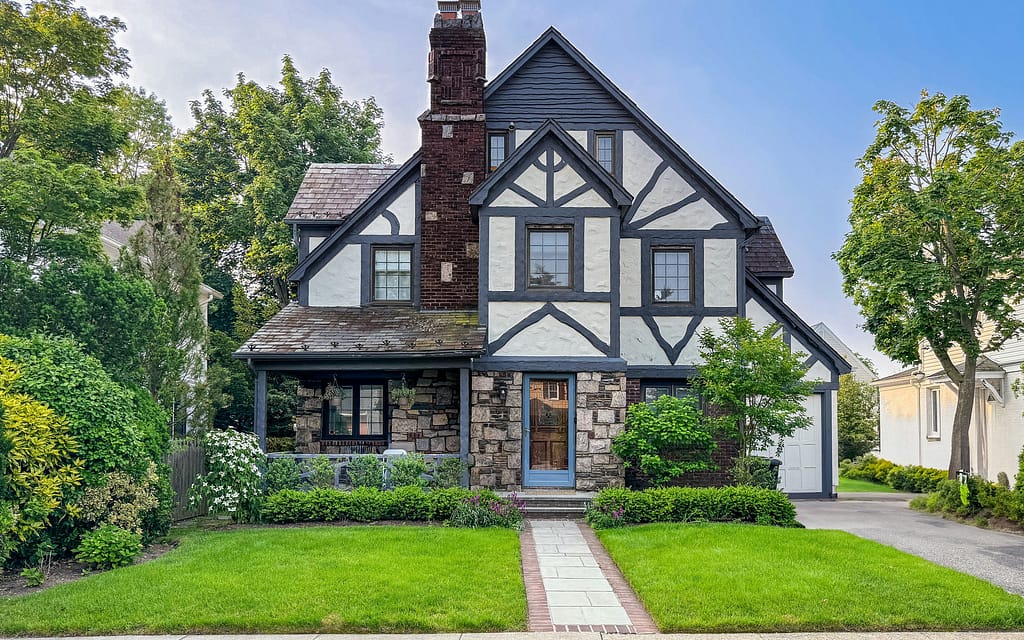
A yard with five different “features” an isolated bed here, a gnome collection there, a random boulder, a rose arbor, and a fire pit that doesn’t relate to any of it, doesn’t read as abundant. It reads as scattered, busy, and unplanned. Great landscaping, like great interior design, starts with one governing concept and lets every other decision support it.
The fix: Choose a single theme (formal and symmetrical, coastal and relaxed, modern and minimal, cottage and layered) and let your plant choices, materials, and hardscaping all reinforce it. Layer in plants of varying heights and bloom times so the design or color changes through the seasons but never loses its throughline.
2. Damaged or Missing Edging, Fencing, Paving or Other Landscape Elements

Nothing says “I gave up” quite like edging that’s cracked, sunken, or simply gone. It’s a small detail, but it’s the frame around every bed in your yard and a broken frame draws the eye to exactly what you don’t want it to see.
The fix: Re-edge beds with a clean, consistent material (steel, natural stone, or a crisp cut trench edge) and stick to one edging, screening or planter style throughout the property. Consistency here does more for a polished look than almost any other single upgrade.
3. Plants That Are the Wrong Scale

A single tiny shrub swimming in a giant bed, or a row of identical mid-size plants with no variation in height, both make a yard feel flat and unfinished. Good landscaping uses scale the way a good room uses furniture — tall pieces to anchor, mid-height pieces to fill, and low plantings to soften edges and create a sense of layered space.
The fix: Think in three tiers, anchor plants (trees or large shrubs), structural mid-height plants, and groundcover or low border plants and use all three together to create real depth instead of a flat green wall.
4. Landscape Lighting That Shows Off Instead of Setting a Mood

Lighting should make a yard feel three-dimensional after dark — highlighting a specimen tree, softly lining a path, washing a wall with a warm glow. What it shouldn’t do is call attention to the fixture itself. Oversized, mismatched, or overly bright landscape lighting reads as gaudy rather than upscale.
The fix: Use low, warm-toned path lights and uplighting on a few key features rather than lighting everything equally. The goal is depth and mood, not a runway.
5. Brightly Dyed Mulch
Brightly dyed mulch, the cherry-red or jet-black kind, is one of the fastest ways to make a landscape look artificial and unwelcoming. It fades unevenly, bleeds color onto walkways after rain, and reads as a shortcut rather than a design choice. Natural, undyed hardwood or bark mulch breaks down slower, smells better, and actually improves your soil as it decomposes. Some mulch mixes actually help deter pests. High-end landscape designers almost never use dyed mulch and once you notice it, you’ll see why: it fights with everything around it instead of blending in.
The fix: Switch to natural brown or shredded hardwood mulch, and refresh it once a year rather than letting it gray out and thin down to bare dirt.
6. Plastic Edging, Man-Made Colored Pavers and Other Non-Natural Materials
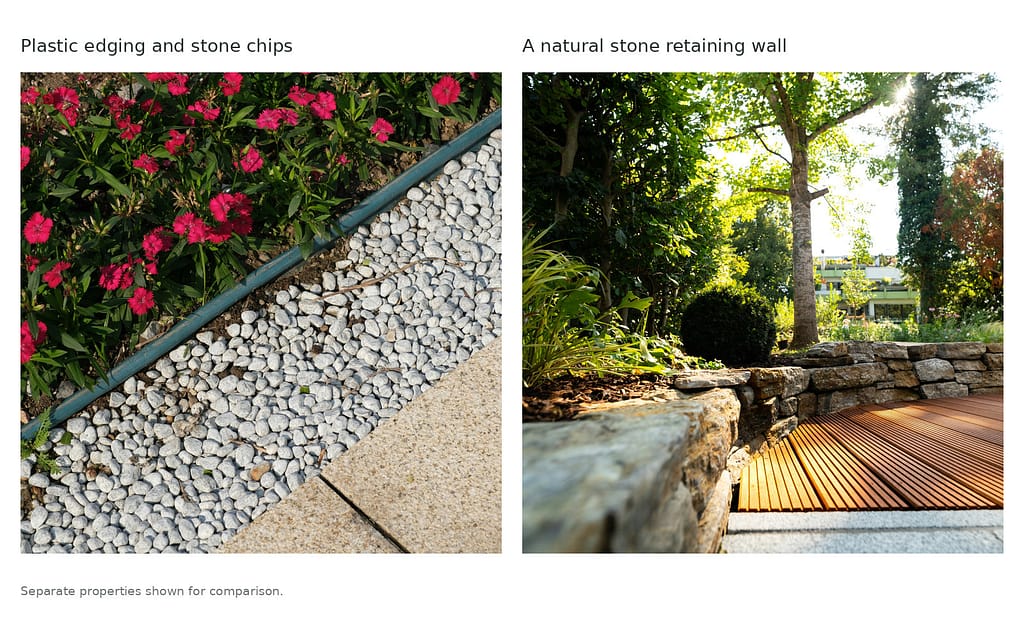
Faux stone pavers, plastic edging pieces, and synthetic “rock” accents almost always fight with their surroundings instead of complementing them unless a deliberately artificial look is the actual design concept (which, for most homes, it isn’t). Natural materials weather gracefully. Fake ones just look fake, and they look worse as they deteriorate under harsh sun or weather every year.
The fix: Choose real stone, brick, wood, or concrete wherever the budget allows. If cost is the concern, use less of a real material rather than more of a fake one a small well placed patch of genuine flagstone will always outperform a large expanse of imitation.
7. A Random Mismatch of Pots, Planters, or Decor
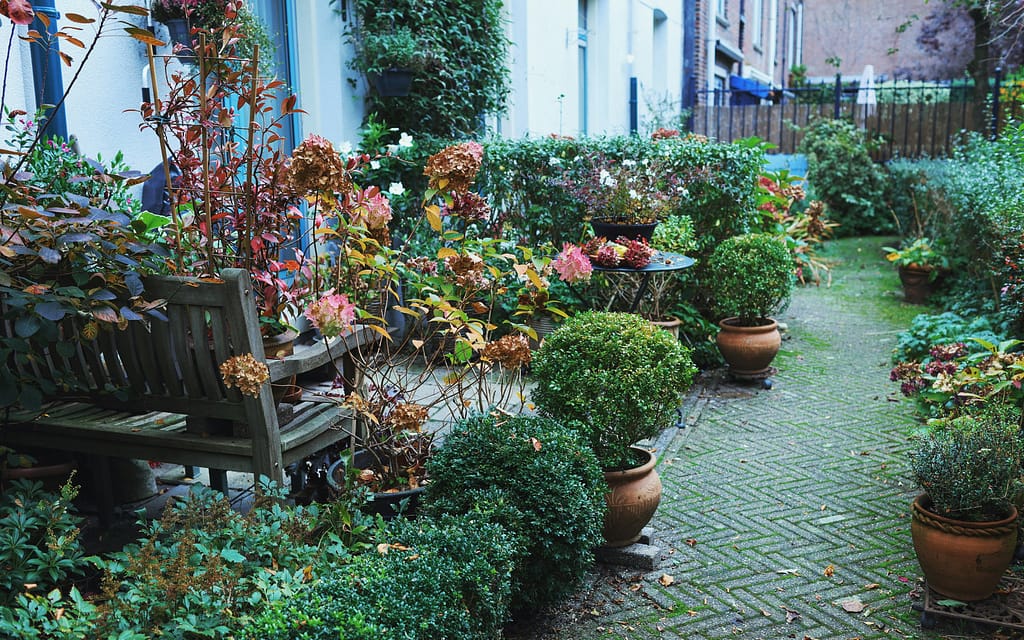
One terra-cotta pot by the door, a plastic planter by the garage, a cracked urn nobody’s gotten around to replacing, scattered individually instead of grouped, in different styles and sizes, some with dead plants still in them. Individually, none of these choices seems like a big deal. Together, they make a yard look neglected and unplanned.
The fix: Group containers rather than scattering them, match materials and finishes across the property, and retire anything cracked, faded, or empty. A cluster of three matching planters does more for curb appeal than ten mismatched ones spread across the yard.
8. Plants That Don’t Belong in Your Climate

Tropical plants in a temperate yard, or moisture-loving plants in a drought-prone region, tend to stand out for the wrong reasons. They require constant intervention to survive, they clash visually with everything native around them, and they signal “high-maintenance showpiece” rather than “thoughtfully designed landscape.” They also do nothing for your local ecosystem, native and climate-appropriate plants support local pollinators and soil health in a way transplanted exotics never will.
The fix: Choose plants native or well-adapted to your region. They’ll look more at home, need less water and babying, and tend to be lower-cost to maintain over time a detail buyers and appraisers increasingly notice.
9. Too Many Competing Materials or Elements

Stone pavers, brick edging, gravel, mulch, decorative concrete, and a metal accent border, all in the same twenty feet of yard, is a recipe for visual noise. Every material is “saying” something on its own, and when too many are talking at once, none of them come through clearly.
The fix: Pick one primary hardscape material and one, maybe two, supporting materials for the whole property. Repeat them in different applications the same stone as a path and as a low retaining wall, for example, so the choices read as intentional rather than accidental.
10. A Floral Color Concept That Is Not Coordinated

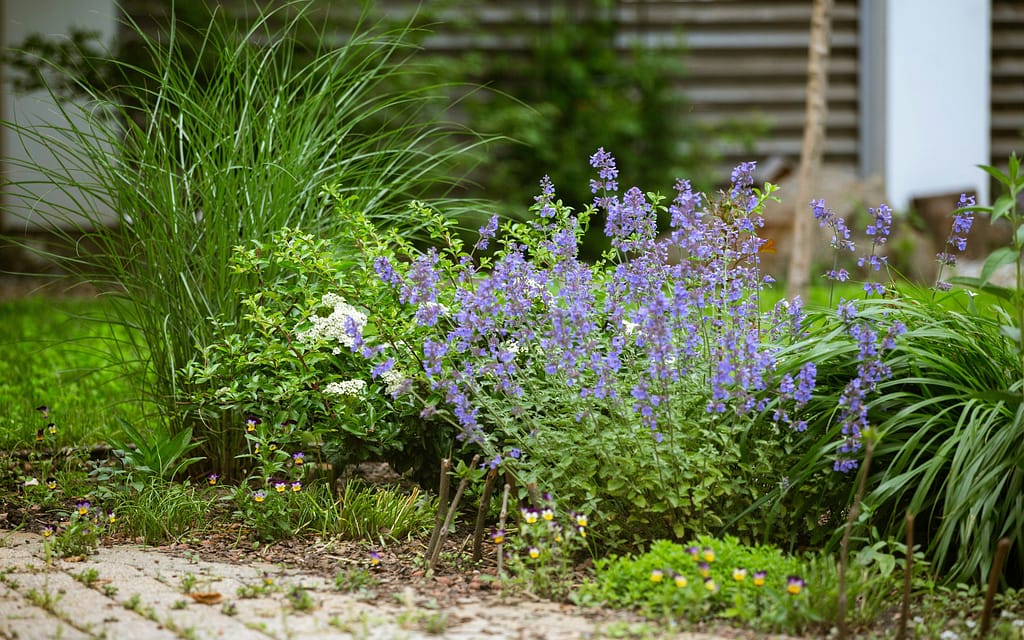
A landscape can have beautiful plants and still look chaotic if the colors are fighting each other. Too many unrelated bloom colors, foliage tones, and seasonal accents can make the yard feel loud, accidental, and less expensive than it really is especially when spring bulbs, summer perennials, fall foliage, and winter evergreens all seem to belong to different design plans. Upscale landscapes usually have a clear color story: a restrained palette that repeats around the property, shifts gracefully through the seasons, and works with the home’s exterior colors rather than competing with them.
The fix: Choose a simple color concept before buying plants, for example, whites and greens for a clean classic look, blues and purples for a cool garden, or soft pinks, creams, and silvers for a romantic cottage feel. Then plan bloom times so each season has interest without introducing a completely new palette. Use foliage color, evergreen structure, bark, berries, and ornamental grasses to carry the concept through months when fewer flowers are blooming.
The Bigger Idea: Landscaping Is Interior Design, Just Outside
Every one of these fixes comes back to the same principle: a landscape doesn’t need to be perfect to look upscale — it needs to be coordinated, intentional, and cared for.
The best-looking yards aren’t the ones without hoses, tools, or trash cans; they’re the ones where someone has figured out where those things live out of sight. A dedicated storage bench, a screened utility area, or simply a habit of putting things away after use does more for curb appeal than almost any plant purchase.
Does Landscaping Increase Home Value?
If you’re planning to sell, refinance, or simply enjoy your home more, landscaping remains one of the highest-return investments available to homeowners — and unlike a kitchen remodel, most of these fixes cost a weekend and a trip to the garden center, not a contractor and a loan. Start with the cheapest, most visible items first (mulch, edging, decluttering) and work outward from there. A cohesive, well-maintained landscape doesn’t just increase your home’s value on paper — it changes how it feels to come home every single day.