Principles for Spatial Design: An Overview
Spatial Design is more than aesthetics. It’s about creating 3-dimensional spaces that are intuitive, functional, and emotionally resonant. If you’ve read our previous article on developing creative perception: You’re ready to combine those skills with these fundamental design principles to elevate your spatial design abilities. This guide distills essential concepts from decades of ergonomic and psychological research into principles that can eventually be applied to staging, interior design, and beyond,, especially when paired with practical home design ideas.
Why Study Spatial Design Principles?
Design principles are not arbitrary or stylistic rules; they stem from universal human needs and responses. As humans, our physical structure—two arms, two legs, two eyes, a predictable height range etc (our ergonomic blueprint), combined with our innate emotional triggers and cognitive responses stemming from sensory perception, shape how we experience space.
Researchers (both designers and psychologists) have studied what makes environments resonate with us and why.. While individual preferences vary, the underlying mechanisms of spatial experience are remarkably consistent and their findings – which inform these design principles – form the backbone of spatial design theory. To create a successful space, it is essential to understand how and when to use these design principles.
Studying these principles provides a framework for answering essential questions:
- How do spaces communicate meaning?
- What psychological responses do spatial arrangements evoke?
- How can design language create coherence across environments?
These principles are especially important when preparing a property for sale, where layout and perception directly influence buyer decisions, particularly when combined with strategies like decluttering your home before selling.
Concepts in Design Theory
Symbolism
Symbolism in design refers to the meanings embedded in objects, materials, and spatial arrangements, reflecting cultural and social concepts. These associations between meaning and object often stem from historical evolution and may persist or be redefined over time. Designers make deliberate choices about the use of elements not only for function but for the messages they convey to give their design projects ‘life’ by adding layers of information. For example, the installation of gold-toned hardware might signal trendiness in one context or, in another context or culture, suggest high status. As another example, the use of large terracotta pots around a backyard entertaining area that symbolize a Mediterranean type environment may serve to promote a feeling of relaxation and ease from the association of terracotta and our collective knowledge of those cultural lifestyles. Symbolism communicates beyond utility, shaping perception and intent.
Language
A design language is the chosen framework through which these symbolic meanings are expressed.
It ensures that every element in a project—furniture, fixtures, finishes—works together to express a unified concept. A language doesn’t require identical or matching pieces; rather, each component should communicate the same underlying message in support of the overall concept. Establishing this clear design concept and then, choosing a cohesive language in support of it, will make the design intent clear and the experience harmonious for anyone engaging with the space.
For example, consider a Spanish-style home re-interpreted through a modern lens. While honoring the architectural roots of the exterior and structure,, a redesign of the interior might feature more simplified forms, open layouts, and subdued tones instead of ornate details and vivid colors typical of historical Spanish design. Even with variations in paint or finishes across rooms, a consistent language of minimal ornamentation, natural materials and restrained colors in a unified palette ensure the entire home feels like one continuous story.
Balance, Visual & Spatial ‘Weight’, and Composition
Balance refers to the visual or spatial weight of objects arranged so they are in equilibrium. It can be achieved through the interplay of light and dark, size and shape, color combinations, or density and openness—ideally balancing all these concerns at once. Each component needs counterpoints to prevent dominance, ensuring no single area or object overwhelms the composition.
Symmetry, the most recognizable form of balance, creates calm and stability through mirrored elements. It’s commonly applied in spaces where order or formality is required, and its predictability feels reassuring to us because our human bodies are inherently symmetrical.

Asymmetry introduces dynamism by using unequal elements or placements. While it may appear imbalanced, asymmetry can still achieve harmony when grouped so their collective visual weight feels even. This approach is often used in designs that encourage movement through a space.
Composition can be described as the sum of the elements in a balanced configuration which have been organized in a particular way that is essential to the expression of the designer’s chosen concept. Organizing the elements differently would alter meaning and evoke different responses. Composition is an important concept to consider when aiming to channel a particular message or elicit a specific response.
Color
Color theory in design is not about prescribing palettes, it is a conceptual tool. It is a collective body of information that allows us to understand color relationships and the psychological effects these have on us. Colors also carry symbolic and perceptual weight, shaping how we interpret a space. For example, warm hues often suggest intimacy, while cool tones imply openness. Pure primary colors can feel energetic or man-made, whereas muted or natural tones often represent softness and organic qualities. These associations are influenced by culture, biology and history but also rooted in physiological responses to light and wavelength.
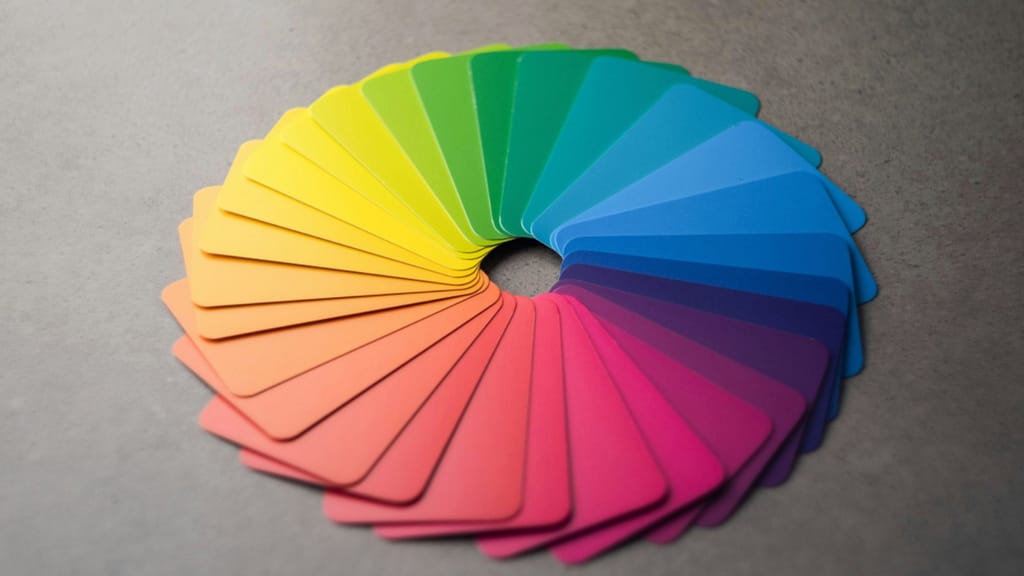
Color perception is based on the entire spectrum of light that is visible to us as humans. Each hue (subset of the color) within that spectrum of all colors is manifest by its own unique wavelength of light. Each hue ‘created’ by each different wavelength is represented on a color wheel in a fixed location relative to the other colors – and the relationships of these colors to each other is constant because the wavelengths that create each hue never changes.
The color wheel is a visual representation of these relationships, showing how hues transition in sequence and how complementary colors sit opposite each other on that diagram. Designers understand and utilize this set of ‘color rules’ to create harmony, contrast, and balance in their work, knowing that these relationships are grounded in the physics of light rather than trends or subjective interpretation.
In spatial design, color theory informs conceptual decisions. Designers typically select a palette that works harmoniously while assigning each color a specific role. A common approach includes defining:
- Main Background color (often a wall or ceiling)
- Primary focus color
- Complementary color for balance
- One or two accent colors for interest
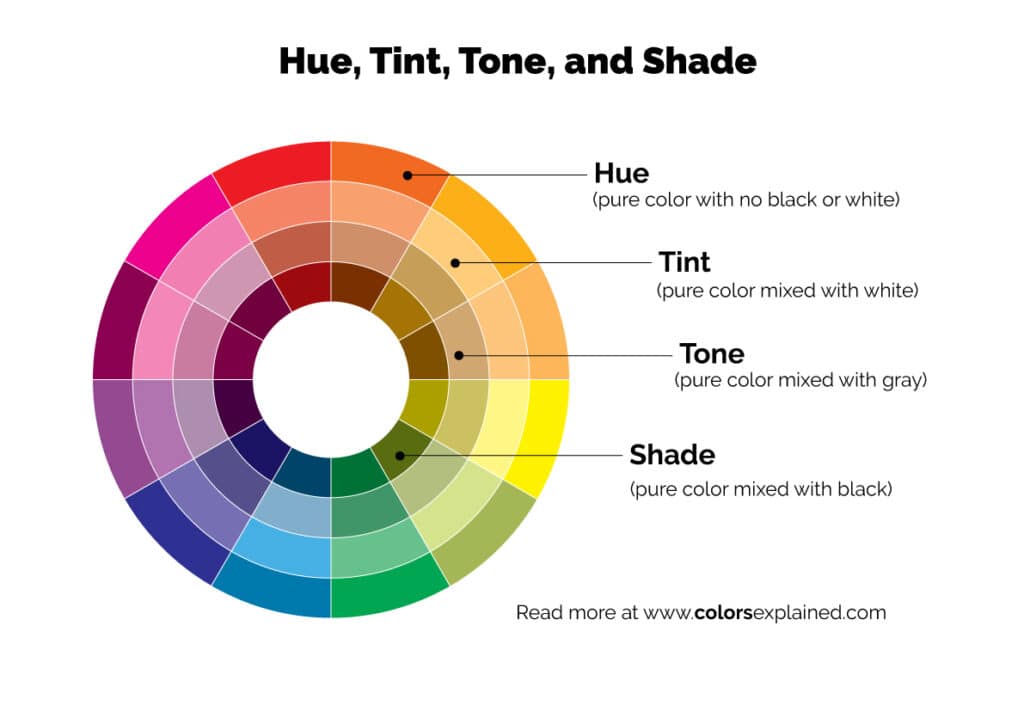
Beyond choosing colors, designers also consider tints, shades, and undertones of each color or hue to create cohesion. Colors from the same family—for example, sharing gray, brown, or yellow undertones—‘speak’ to each other and reinforce a unified design language. To help draw a picture of why choosing colors from within the same family is often crucial, imagine, pairing a bright pure red with a dusty gray-green. Such a pairing of two hues from different color families should feel discordant and undermines the concept by presenting contrasting messages. As such, combinations like this are often viscerally unsettling.

Material Properties as Design Considerations
Shape and Form
Shape refers to a two-dimensional outline defined by edges, while form describes the three-dimensional quality of an object, defined by its surfaces. You’ve likely come across the mantra ‘ ‘Form follows function’ , but the choice of form and shape are dependent on other factors also. Shapes and forms are imbued with meaning – usually in their referencing of other things such as nature, geometry, or the human body—connections we recognize instinctively. By choosing them carefully, designers create a visual language with shapes and forms and their arrangement that makes the the design of space convey intentional meaning.
Texture and Pattern
Texture refers to the surface quality of a material, adding depth and tactile interest to a design. It conveys meaning about the material’s properties, its suitability for a specific environment or purpose, and sometimes its perceived status. For example, smooth surfaces often feel sleek and modern, while rough textures suggest naturalness or a less refined character. Designers frequently use lighting to emphasize texture, making use of the difference between light and shadow to define textural detail.
Pattern, typically applied to an object’s exterior, can unify or disrupt the overall design of an object depending on its scale and repetition. Often, pattern is applied and has no actual relation to the material it covers. Patterns derived from a material’s inherent properties, however, can become a design feature, allowing projects to celebrate the material itself rather than adding unnecessary decoration. Successful designers make use of the inherent patterns in materials themselves which helps to give an object or element a ‘life of it’s own’.
Principles that Underpin Spatial Design
These principles inform how we interpret three dimensional space:
Light as a medium
Light is arguably the most critical element in spatial design because it enables our sight, the most prevalent of our conscious sensory perceptions. Natural light fosters openness, connection to nature, and well-being, while artificial lighting can be used to define activity: ambient, task, or accent for example. Light is a tool designers often use to:
- signify a mood or function of a space,
- guide movement, emphasize focal points and boundaries of areas
- highlight special features within a space, or
- define aspects of shapes or elements.

The choice of the type and amount of light and it’s location in a space will determine how and what we see and therefore how and what we understand about the environment. It dictates the vibrancy of colors that our eyes and brain register, defines the qualities and textures of a surface through the interplay of shadows, and highlights the outlines of shapes and their relative sizes and positioning relative to each other. Its deliberate placement in a space can dictate our movement towards areas that have, for example focused or directed lighting and away from other areas that may not. On a more functional level, it dictates what types of activities we can accomplish and whether we are stimulated or subdued while doing them.
Scale and Proportion
Scale and proportion ensure harmony among elements and within a space overall.
Scale refers to the size of an object in relation to its surrounding space and to human ergonomics. For example, a tiny rug under a large dining table feels inadequate because its scale doesn’t match its purpose or our expectations. Most everyday objects maintain consistent scale since they relate to the human body and functional needs. Changes in scale are more often influenced by cultural or economic trends than by physical requirements.
Proportion describes the relationship of the size of objects to each other and to the overall composition. Each element should occupy an appropriate amount of space within the room. For instance, smaller spaces often work best with lighter, slimmer furniture, while large rooms can accommodate heavier, darker pieces. When scale and proportion are used correctly, they go unnoticed—but when they’re off or deliberately altered, the imbalance becomes immediately obvious.
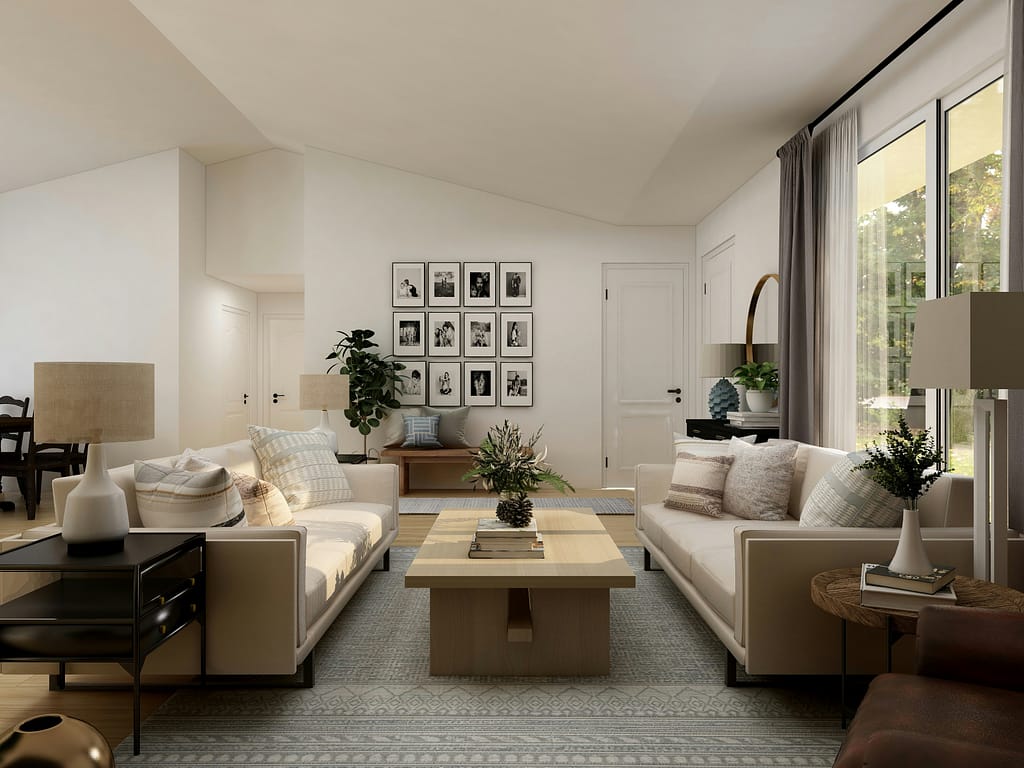
Scale can be defined as the size of a specific object or element in relation to the space it occupies and in relation to human ergonomics and functional requirements. A tiny rug under a large dining table that feels unsubstantial or inadequate would be an example of the scale of a rug that is out of sync with it’s purpose and our unconscious expectations. The scale of many everyday objects varies little because they relate to the general size and design of the human body and our ergonomic needs. It is more likely the shifting cultural or economic trends that have the most immediate impact on the scale of elements.
Proportion is a term used when describing relationships of objects to each other and to the whole composition —each element should complement the whole, taking it’s ‘rightful’ amount of space in relation to the entire room or area. As an example: a smaller space may be best served by smaller or visually ‘lighter’ furniture with thinner structure whereas large heavily upholstered dark colored furniture, for example, might be more ‘in proportion’ with a larger room..
The use of scale and proportion as tools get less attention because when they are employed properly, we take little notice of them and the composition matches out subconscious expectations, but when they are out-of-sync or intentionally manipulated, the discord becomes viscerally obvious. Designers understand this phenomenon and use it to achieve their design concepts.
Envelope and Volume
An envelope is best described as a physical skin or barrier that defines a boundary or is used for containment; volume is the 3 dimensional space inside of it. In spatial design terms, a designer carefully manipulates these elements to dictate the amount of light that enters a space, the visual or physical connection of a space to adjoining spaces and to the outside of its boundaries, and the environmental qualities within the spatial volume such as temperature, sound and even smell.
What might be most interesting, is the influence that the general size, shape and proportions of an envelope and it’s related volume have on our psychological experience of the space. A confining space with little connection to its exterior, for example, where it is out of character, unexpected or inappropriate, might elicit anxiousness from the user while in another context, it might signal coziness, protection and safety. Understanding these effects that bring about our psychological responses is a true mark of a successful designer. They understand principles such as:
- The choice of ceiling height relative to the area defined by any walls and openings – used to convey or control perceptions of spaciousness and also sometimes used to signify differing levels of function or status (for ex. The grandeur of high ceilings as a reference to historical design)
- Openness or permeability of an envelope (for ex. walls with windows) provide visual connection to the exterior, information about time off day and climate, allow light into a space and direct attention toward the exterior or focus to the interior.
The intentional use of space defining elements should, like all other design decisions, be made both as part of the larger ‘plan’ or concept and be in keeping with the overall ‘language’ of the design but also to evoke thought, interest, and provide stimulation so that the space continues to offer it’s user options and opportunities for engagement.
Flow and Movement
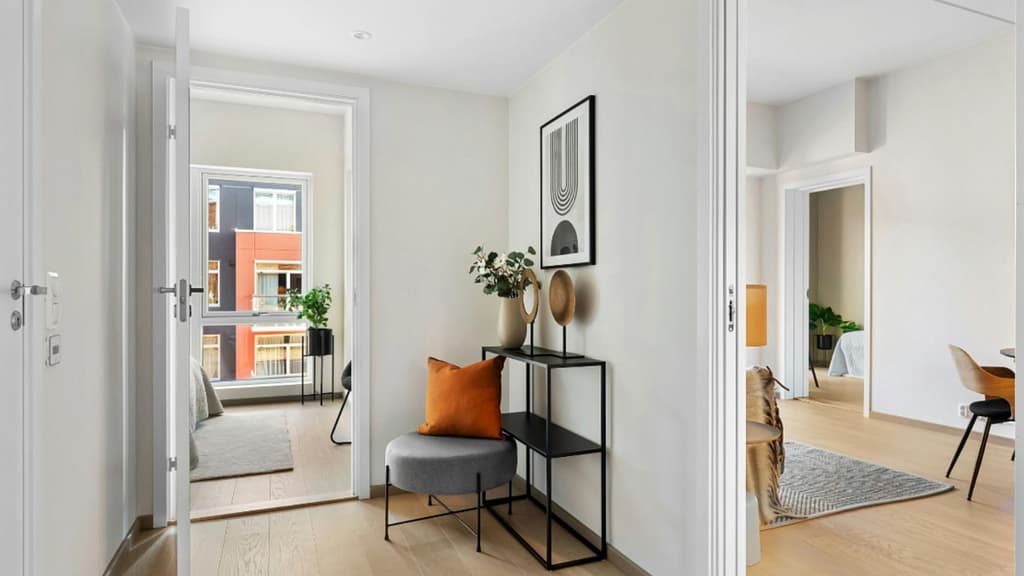
Flow describes how people move through a space and how different areas connect to create that movement. It’s not just about navigation—it’s about how rooms and volumes relate to each other so the experience feels natural. Designers use color, light, and texture to suggest direction and guide users toward interaction or solitude. Clear sight lines and open paths make movement easy, while intentional obstacles can slow people down for reflection, or to define a boundary or change of course..
When spaces connect smoothly, users feel oriented and free to explore. For example, in a museum, adjoining rooms lead visitors forward while offering choices to enter smaller or larger galleries. Flow helps people understand where they are and how spaces fit together within the overall structure.
So in combination with the Design ideas of the Design Primer article:
- Identification: Analyze the givens:
- Determination: Define the concept and design language:.
- Creation: Select colors, forms, materials, and lighting that support the concept.
- Test: Evaluate composition, flow, and user experience.
- Delivery: Implementation.
- Summarize: Reflect on outcomes and lessons learned.
that give a process for mentally conceiving a design project, now add in these ideas about design principles that come in to play in the 3rd step to design and carry out your creative project.
An Example – how to use design principles to craft a design that supports your design concept:
Imagine staging a small urban apartment for sale. The goal: make it feel spacious and inviting.
Assessment:
Small space, unknown needs of new user (so suggest/appeal to as many as possible) convenient to external amenities. Stress the multi-functionality of spaces which suggests getting ‘more’ for the money since the apartment sales price is likely to be high. Identify the strongest asset of the property and highlight that – it will likely be the main attraction.
Concept:
Make space multi functional, open and inviting so that its user and their guests feel comfortable (not confined) spending time there. The goal is to make the prospective new owner aspire to the potential (new lifestyle) that the space offers yet it is immediately comfortable – so they already connect to the space and envisage their belongings there. Suggestive a lifestyle (for ex.: hip modern trendy convenient) but not to the exclusion of other options such that the design excludes interest of some buyers.
Language:
In this example, modern minimalism is chosen. Scale: lighter constructed furniture, that is not bulky, will make the apartment feel adequately sized to accommodate any necessary furniture. Clean lines and open spaces inspire prospects to envisage a blank canvas brimming with possibilities. This also reinforces the multi-functionality and the idea that buyers may have different needs – any of which could be met. Urban setting are often multi-cultural so ensure that design and decor is non-descriptive/universal as possible.
Shape and form:
In smaller spaces, often forms with softer or softened edges feel more inviting since movement through and around furniture in tighter spaces with sharp corners can be more hazardous. Softer lines and flowing window treatments give a relaxed feeling of calmness – like an urban oasis, if that is appropriate in the particular context. Be careful not to make the space overly feminine – it should appeal to the widest amount of potential buyers.
Color:
Use light, warm neutrals to carefully address opposite goals of creating a sense of openness and yet coziness. Complement by small pops of fresh, color for visual interest and memorability. These few carefully chosen accents should be stimulating without overwhelming the space or making it appear cluttered. Ideally, color should come from essential items rather than unnecessary decorative pieces, ensuring every element serves a purpose—preferably multiple functions. Opt for accents with color that can be easily updated, such as sofa cushions, towels, or vases with flowers, to allow quick changes when a new look is desired. This approach helps reduce the feeling of confinement in a small apartment by introducing variety and flexibility. It also reassures potential buyers that personalizing the space requires minimal effort.
Volume and Envelope:
utilize the same wall color for all areas to help unify the space and give a feeling of a larger volume. Allow all windows to be able to be visible to their fullest extent, during the day for example, to provide a connection to the outside and reduce the feeling of being contained or confined.
Light:
Maximize natural light with choice of window coverings that allow light in but blocks views inward; add layered artificial lighting to suggest multiple ‘areas’ or functions in a space.
Flow:
Chosen furniture should also be multi-functional (some that can be folded away) to keep pathways clear. Use furniture (bookcases open on both sides) as room dividers if needed: they maintain the open spacious feel by preserving sight lines and block less light.
Composition:
The ‘message’ of the entire designed space. Direct attention and response by removing as much of the current inhabitants belongings as possible so as not to distract the prospective buyers with functional details (reminding them that storage is at a premium) and visual clutter. Instead, concentrate attention on elements of the space that will bring enjoyment – for example: living their hip-trendy urban identity, or having the space and inviting surroundings to easily entertain guests.
Conclusion: Design with Purpose
Spatial design is a carefully constructed combination of form, function, aesthetics and psychology. It is the Psychological responses, however, that give spaces meaning and inspire engagement. When spaces offer layers of possibilities and meanings, they provide ongoing stimulation and support to those who use them. By mastering principles such as symbolism, color theory, light, and proportion, designers create environments that are both functional and emotionally resonant—spaces that fulfill their purpose and more!
If you’re looking to apply these ideas in practice, you can explore more home design and staging insights across our blog.