How to Reduce Your Energy Bill: 8 Easy, Low-Cost Fixes
Before you begin: a quick reality check
If you have been wondering how to reduce your energy bill without a big spend, start here.
Most homeowners assume lowering their utility bills means a big renovation, new windows, or an expensive equipment upgrade. It doesn’t. Some of the most effective fixes cost almost nothing and take an afternoon, not a season.
I’ve spent fifteen years as an architectural designer and I’m currently a working real estate agent, so I’ve been on both sides of this problem: designing homes to work with the climate, and later walking through hundreds of them during inspections where poor maintenance was quietly driving up someone’s electric bill. I’ve also lived it myself. I owned an old Victorian for years, single-pane windows and all, and learned to be smart about energy the hard way.
The upgrades below are ranked by how easy and low-cost they are to tackle. Do a few this weekend, and work through the rest over time. Small habits, done consistently, add up to real savings, and they also protect the life of your home and its systems.
1. Seal the Air Leaks First (The Fastest Way to Reduce Your Energy Bill)
Before you spend money on anything else, find out where you’re losing conditioned air. This is the highest-return, lowest-cost step on this list.
How to find leaks:
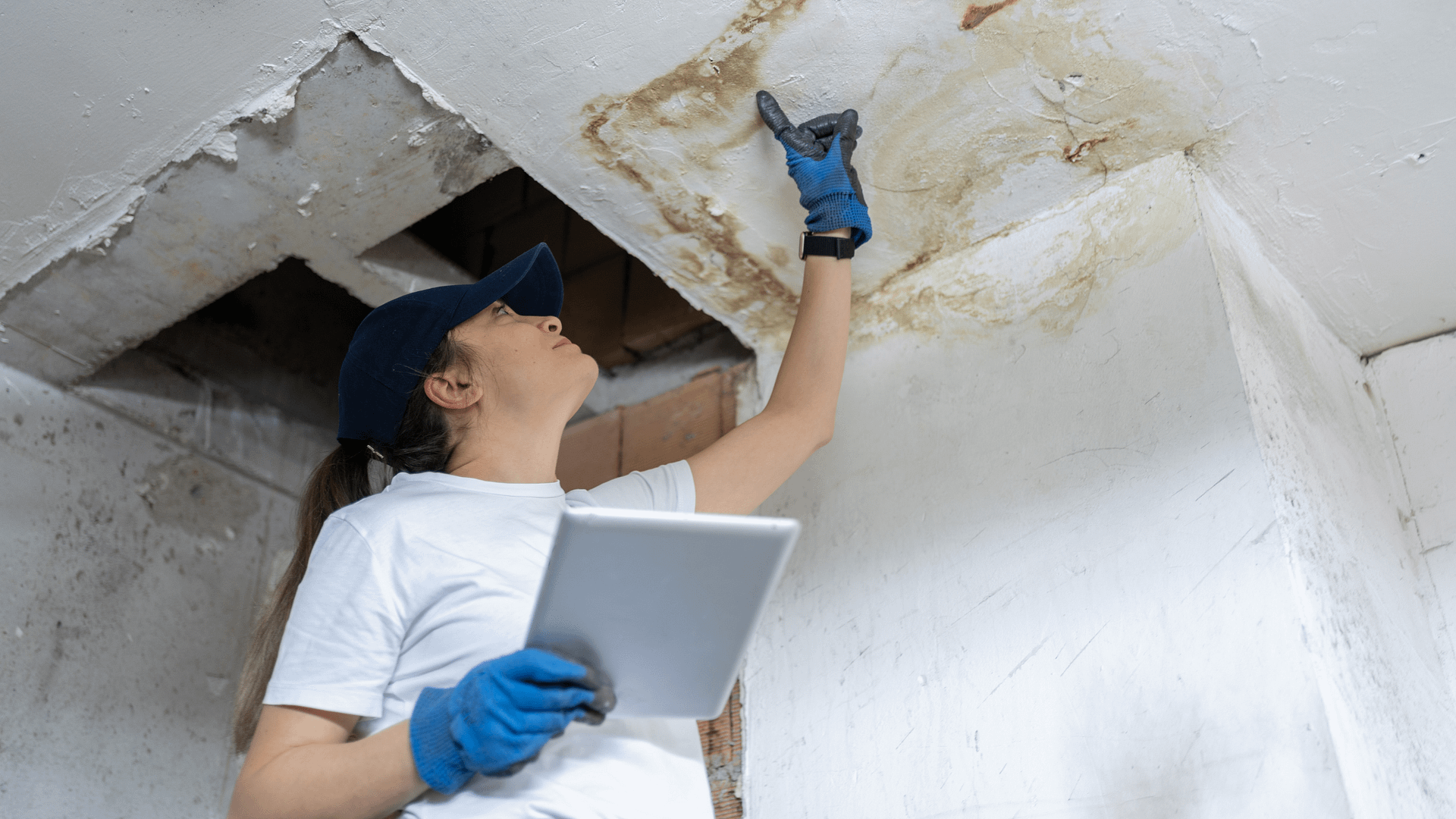
Hire a basic energy audit. An infrared camera scan will show you exactly where warm or cool air is escaping through your walls, ceiling, and floor. It’s inexpensive and it pinpoints problems you’d never spot by eye. Some energy companies offer these (call yours to inquire, or ask them if they can recommend someone) or try Sustainergy Cooperative (sustainergy.coop).
Try the old-fashioned candle trick. Walk a lit candle slowly around your windows, doors, and any wall penetrations. If the flame flickers or bends, air is moving through a gap you didn’t know you had. (Keep it away from curtains.)
Common places air escapes that people miss:
- Wall and ceiling vent boots where the duct meets the drywall opening
- Recessed light fixtures that don’t seal against the insulation above them
- Exterior penetrations where pipes, cables, or vents pass through your siding or foundation
TIP: A completely sealed home isn’t actually the goal. You still need fresh air exchange for good indoor air quality. I use a room air purifier and open the windows whenever the weather cooperates. Keeping your window screens in good repair makes you far more likely to actually open them.
2. Weatherstrip Your Doors
This is a ten-dollar fix with an outsized payoff.
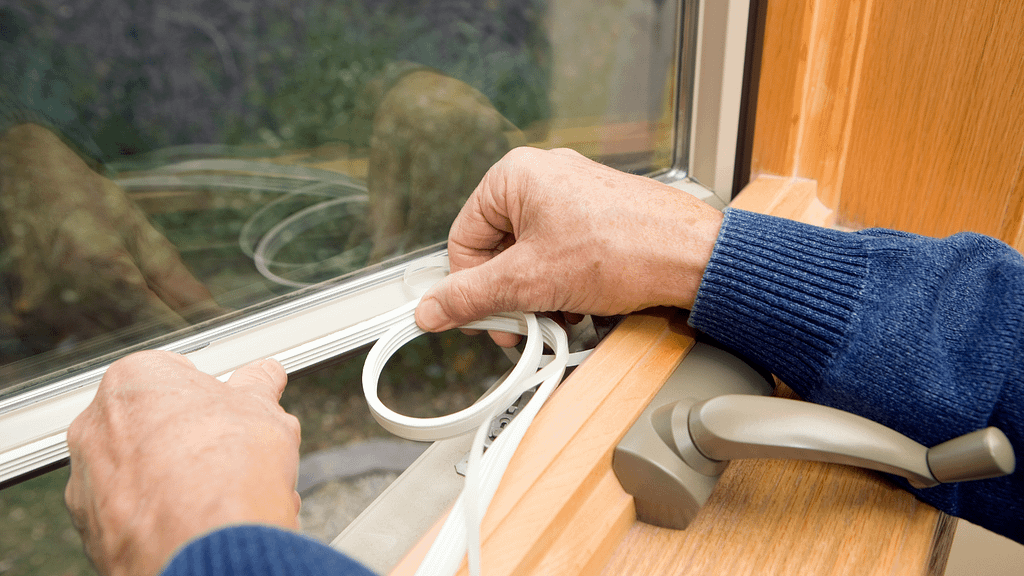
- Add foam strip seals around the inside of exterior door frames, available at any hardware store.
- Install a brush or rubber sweep along the bottom edge of the door to block drafts.
- Don’t forget the garage door. If it’s attached to the house, an unsealed garage door bottom can be a surprisingly large source of heat loss.
These upgrades typically pay for themselves within one heating or cooling season.
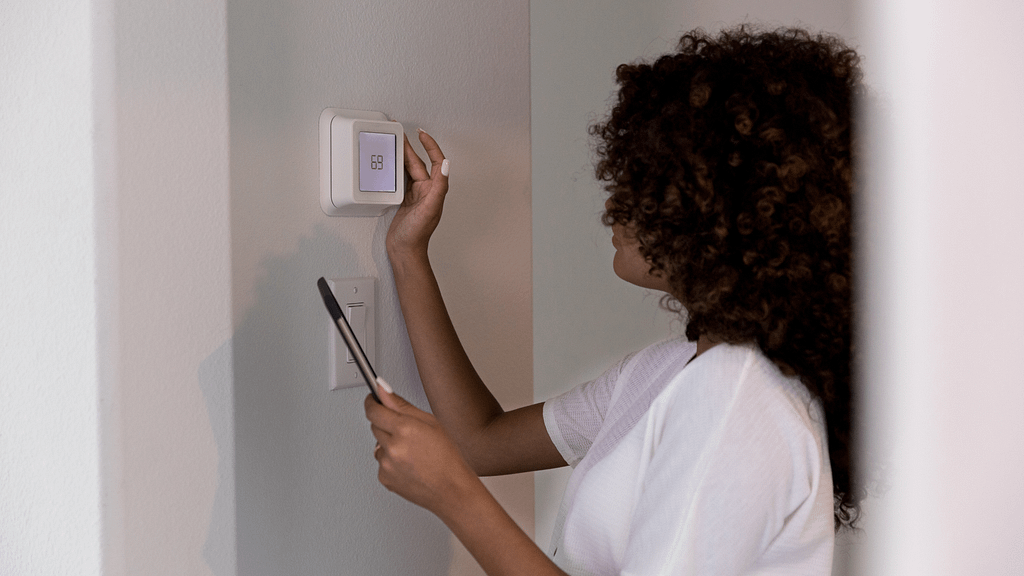
3. Rethink Your Thermostat Habits
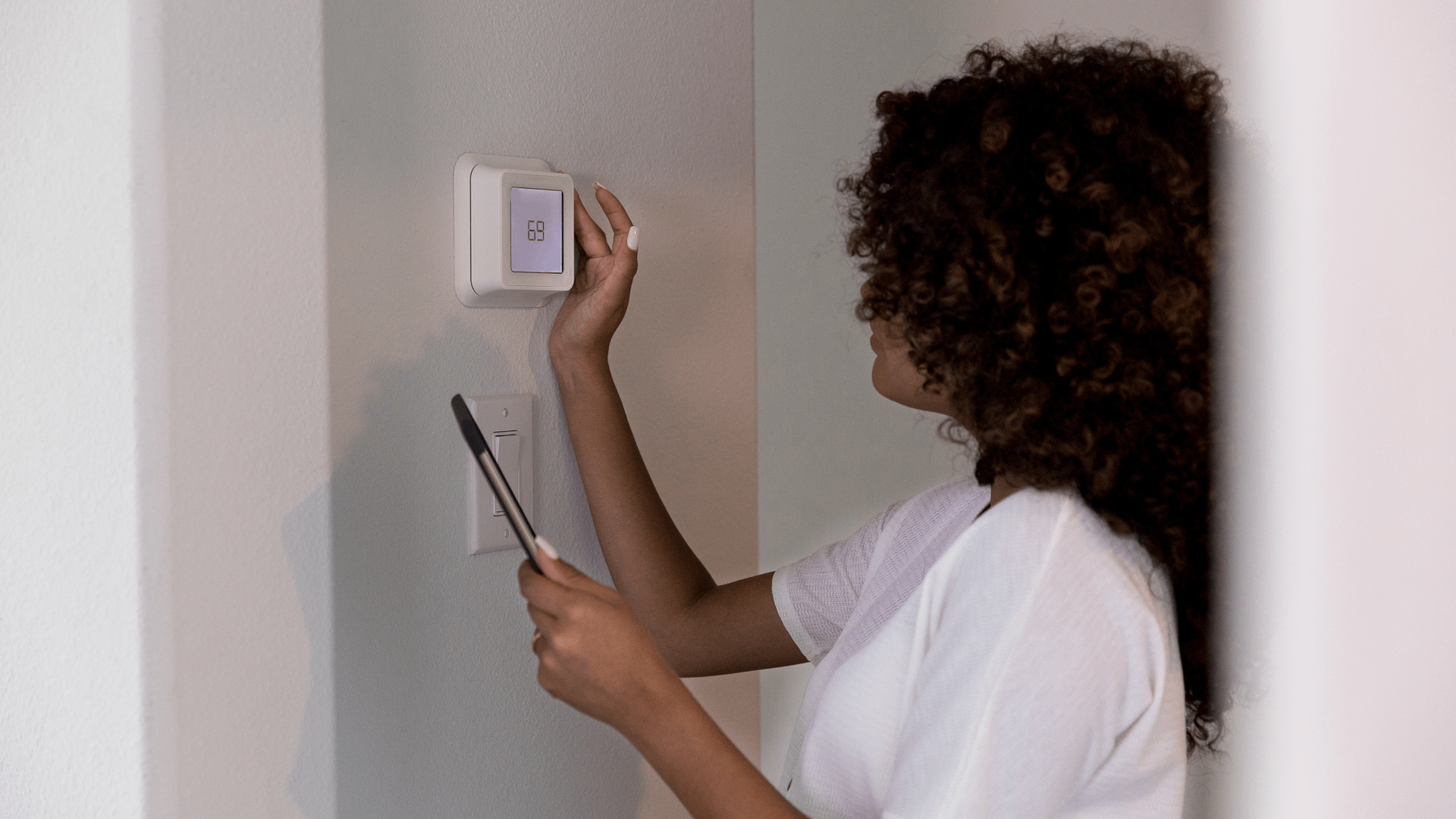
The common advice is to crank the thermostat back significantly whenever you leave the house. In practice, that’s not always the smartest move. If your HVAC equipment is well-maintained and your thermostat is reasonably modern, the system doesn’t need much time to bring a room back to temperature. So instead of a dramatic swing, I recommend:
- Setting your thermostat back by just 2 to 3 degrees when you’ll be out for more than two to three hours
- Programming it to gradually ramp back to your desired temperature shortly before you’re due home, rather than blasting the system the moment you walk in
Why this matters beyond the bill:
Large, sudden temperature and humidity swings put real strain on your HVAC system, and they can also stress your home itself. Wood floors and trim expand and contract with temperature and moisture changes, and dramatic swings can lead to cracking or warping over time. Gradual, modest adjustments protect both your equipment and your house.
4. Use Ceiling Fans Correctly (Most People Don’t)
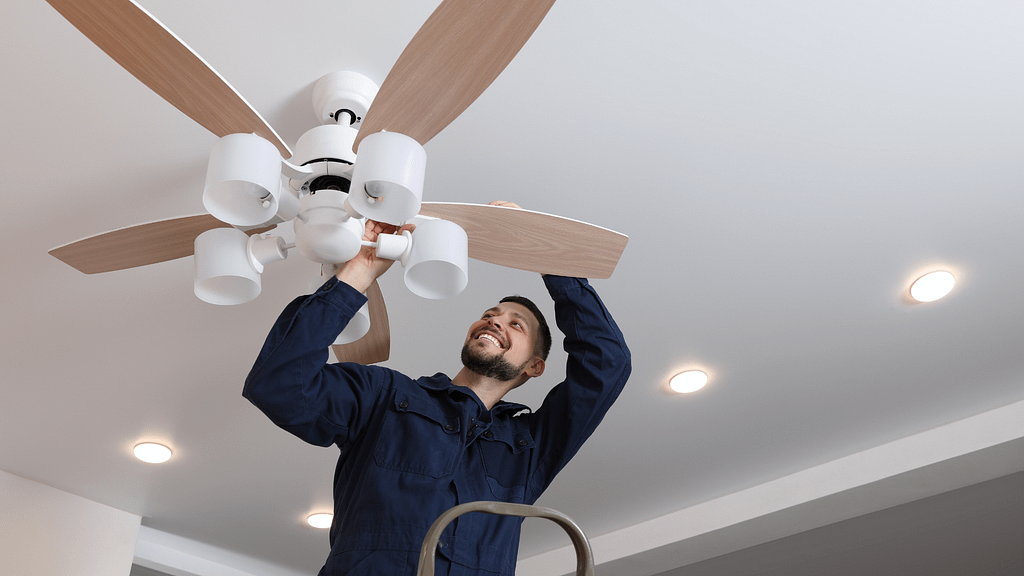
Ceiling fans are one of the most misunderstood tools in the house, and used properly they’re one of the simplest ways to save on your electric bill. A fan doesn’t heat or cool the air. It only moves it. Running fans on high in empty rooms all day does nothing but waste electricity.
- Only run a fan when you’re in the room or moving around the home, and generally on a low to medium setting is enough to keep air gently moving.
- Turn them off in rooms you’re not using for extended periods.
- Use the direction switch. In summer, set the blades to pull air upward, drawing warm air away from your body. In winter, reverse it so the blades push warm air down from the ceiling toward you.
Most people never touch that switch and miss out on a free efficiency boost every winter.
5. Upgrade to LED Lighting to Save on Your Electric Bill
This one’s simple, and it’s more than just a lower electric bill.
- Old incandescent and halogen bulbs generate a surprising amount of heat, which means your air conditioner has to work harder to compensate. LEDs run cool, taking that extra load off your cooling system entirely.
- LEDs are now available in a wide range of color temperatures, so you can match the warmer glow of old incandescent bulbs if that’s the look you prefer.
- They’re built from plastic with no delicate filament, so they hold up far better to bumps and vibration.
- Because LEDs come in so many shapes and forms, they’re worth using in places you might not think of. I’m seeing more of my real estate clients add easy, inexpensive under-cabinet LED lighting in kitchens and motion-activated LEDs in pantries, laundry rooms, and closets. Buyers notice these small touches, and they read as a modern upgrade even though they cost very little to install.

6. Install Water-Saving Fixtures
Water bills have been climbing, and low-flow fixtures are one of the easiest wins available, and a genuine selling point if you ever list your home.
- Low-flow showerheads and faucet aerators cut usage without much of a noticeable difference in daily life. I actually prefer a low-flow hand shower when paired with a fixed showerhead. It lets me direct water exactly where I need it to be more efficient and clean better, and, as a bonus, it makes cleaning the tub or shower much easier.
- Check for running toilets and leaky valves. A quarterly walk-through checking for leaks catches problems before they show up as a spike on your water bill.
- Consider a whole-house water filter. This one isn’t necessarily cheap but there are so many benefits. Beyond improving water quality and taste, filtering out minerals and contaminants helps extend the life of your fixtures and keeps them running efficiently, since mineral buildup is what tends to clog and degrade them over time.
7. Maintain (Don’t Just Install) Your Insulation
Attic insulation. Insulation isn’t a “set it and forget it” upgrade; it needs to actually be doing its job.
- Check that insulation sits snugly against recessed light fixtures. Gaps here let conditioned air escape straight into your attic.
- Look for insulation that’s been compressed, displaced, or pushed aside, often from storage boxes or previous work in the attic. Compressed insulation loses much of its effectiveness.
And not just the insulation in your attic, but the insulation value of your windows is important also.
- If you have older double- or triple-glazed windows, check the glass for fogging between the panes. The fog itself isn’t the real problem; it’s a sign the gas fill between the panes has leaked out, which causes the window to lose its insulating value.
If you can’t replace old single-pane windows (this was my situation in the Victorian), sheer curtains that sit close to the glass add a small amount of insulating buffer during the day, and pulling heavier draperies closed at night makes a noticeable difference.
There are also solutions with adding non-stick heat set clear film in the winter (if view isn’t a priority, and you have a blow dryer for the installation). There is also a product called Indow.
8. Keep Your HVAC Equipment Maintained, Not Just Installed
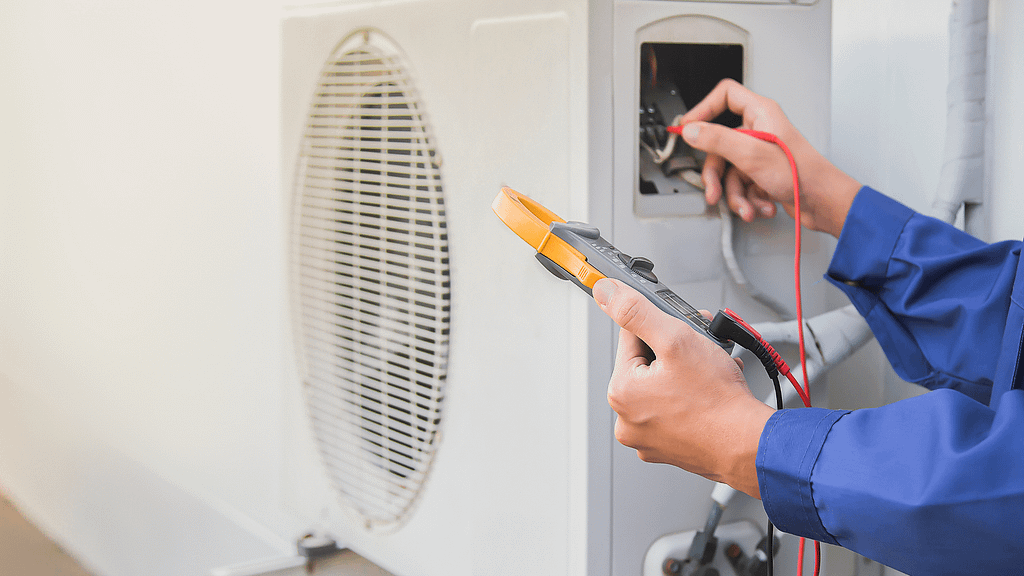
This is the one I see overlooked most often during home inspections. Your HVAC system is the single largest energy user in most homes, so keeping it maintained does more to reduce your energy bill than almost anything else on this list. A heat pump, furnace, or air conditioner left completely on its own will not run efficiently, and eventually it can damage your home.
- Change your filters regularly. Some are behind your return air vents, others are located right at the unit. A clogged filter forces the system to work harder to pull air through it, which means it’s pulling more electricity to do the same job.
- Maintain your condensate lines and drain pans. Cooling equipment works by pulling moisture out of the air, and that water has to go somewhere. Flush the condensate line periodically with a bleach-water mixture to prevent bacterial clogs, and make sure the drain pan underneath the unit stays clear. A simple, inexpensive water-sensor alarm at the edge of the pan will automatically shut the unit off if water starts to build up, before it overflows into your home.
Think in zones if you have the equipment for it. In my Victorian, I ran a dual-zone heat pump system: air conditioning upstairs in summer, heat downstairs in winter, working with how heat naturally rises and falls through the house rather than fighting it.
Worth remembering: Homes built a century ago were designed around passive heating and cooling, tall ceilings to let summer heat rise away from living space, transom windows above doors to move air at a high level, rooms on different floors designed differently on purpose. You can borrow from that logic even in a modern home. Working with your house’s natural airflow, rather than only relying on mechanical equipment to fight it, is often the cheapest efficiency upgrade there is.
Final Thoughts
None of this requires a big budget or a free weekend. These are small, inexpensive habits and checks you can chip away at a little at a time, and every one of them pays you back twice: once on your utility bill, and again in the extended life of your systems such as your HVAC system (the largest consumer of energy) and the condition of your home overall.
Preventative maintenance always costs less than the repair that follows from skipping it. Homeowners often only weigh the immediate savings and overlook the rest: the years added to your equipment’s life, the property preserved by avoiding harsh temperature and moisture swings, and the fact that a well-maintained home shows the moment a buyer walks through it.
Do these things consistently and they become automatic. Take care of your home, and it will take care of you back.
FAQs
What’s the cheapest way to reduce my energy bill right now?
Sealing air leaks and weatherstripping exterior doors. Both cost very little and often pay for themselves within one season.
What are the best ways to save on an electric bill without replacing appliances?
Switch to LED bulbs, use your ceiling fans on low only when you’re in the room, and keep your HVAC filters clean. None of those require new equipment, and all three cut how much electricity your home draws every day.
Should I turn my thermostat off completely when I leave the house?
No. A modest 2–3 degree setback for absences over two to three hours saves energy without straining your HVAC system or your home’s building materials. Then it can ramp back up easily and quickly without being strained.
Do ceiling fans actually save money?
Yes, but only when used correctly. Run them on low to medium while you’re in the room, switch off or to a lower setting when you leave, and reverse the direction seasonally, counterclockwise in summer, clockwise in winter.
How often should I maintain my HVAC system to keep bills down?
Change filters regularly, flush condensate lines periodically with a bleach-water mixture, and have the system professionally serviced at least once a year.