Art, Design & Creativity: Foundations of Human Experience
Art, Design, and creativity are not just buzzwords, they are the bedrock of human activity. They permeate every aspect of life, shaping how we interact with the world and each other. Yet, despite their ubiquity, our collective understanding of these concepts remains surprisingly vague, and therefore, our ability to successfully access these concepts is limited. This post aims to clarify what design and creativity truly mean, why they matter, and how anyone can access them.
While these ideas may feel abstract, they play a practical role in how we experience and interact with spaces, something that becomes especially clear in areas like home staging to sell: what homebuyers notice.
Why creative work is essential
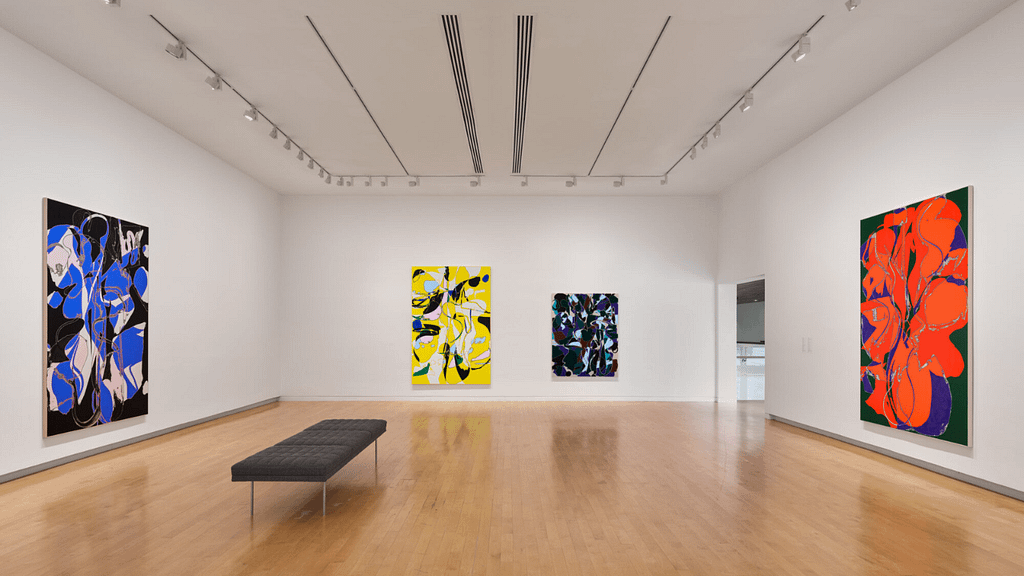
Art and music often serve as prime examples of artistic creativity. These forms exist primarily to fulfill emotional needs, which might seem non-essential at first glance. But imagine a world without paintings or music, and it would feel bleak and lifeless. Artistic works remind us of our humanity, offering emotional depth and a lens through which we understand ourselves and our environment.
On a larger scale, society uses works of art and design as benchmarks of achievement. Not every poster is ‘Art’, nor every building ‘Architecture’. These standards reflect our curiosity and drive to evolve, pushing us to create works that stir emotions and provoke thought, and they reflect the very best that humankind is capable of.
This foundation sets the stage for the next part of the series, which explores how these ideas take shape in practice through spatial design principles.
Next in This Series: Spatial Design Principles
How does Creativity underpin Art and Design
I define Design as the combination of Art (evoking thought through emotion) and the act of creating necessary things – producing an outcome or work which enables people to live and experience their lives to the fullest. Creativity is the inspired, insightful, and inquisitive thought process, drawing upon a highly developed and sometimes ‘unorthodox’ set of observations, that informs decision making (idea generation) in the creation of these new or novel works, where Artistic creativity and Design creativity overlap is in the fact that their products are both usually developed via this heightened, attuned and insightful mental state of mind – a way of thinking and ‘perceiving’ that some people seem to be born with but could, I believe, be nurtured in almost anyone.
The Language of Creativity
Creative works, whether a painting, a building, or a piece of music, communicate through their own unique language, which is also specific to each medium. To enjoy or experience these works, we simply need to recognize this language, but to create those works requires a deeper understanding of the use of that language and its effects on us. Successful artists and designers understand and tap into these universal human emotions and needs, and the language of their medium, translating this into creative work that they reflect back to us. We form an appreciation of the creation because it may resonate deeply, often without our true understanding of why.
Learning How to Develop Design Skills and Think Creatively: what I learned
My own design education, rooted in architecture, interior design, and design studies, taught me not just technical skills but, more importantly, a way of engaging with the world. I was shown how I needed to move through and experience life with my senses attuned to the world around me to absorb the layers of information in front of me, engage, and find ‘hidden treasures’ of information that would fuel my passion to continue. From those observations, I needed to examine and question everything I experienced to form hypotheses and views. I tested and challenged my views, examined my own reactions, and observed those of others to try to determine what was universal and gain a greater understanding of human psychology.
From that process, I learned how to discern meaning, connections, and possibilities, and how repeating this process and refining it led to my thought process becoming more developed, more automatic, just part of my normal daily life. And finally, I learned how I could use those thoughts, ideas, and knowledge I had derived from my experiences as preparation to express myself creatively in almost any medium or situation I encountered.
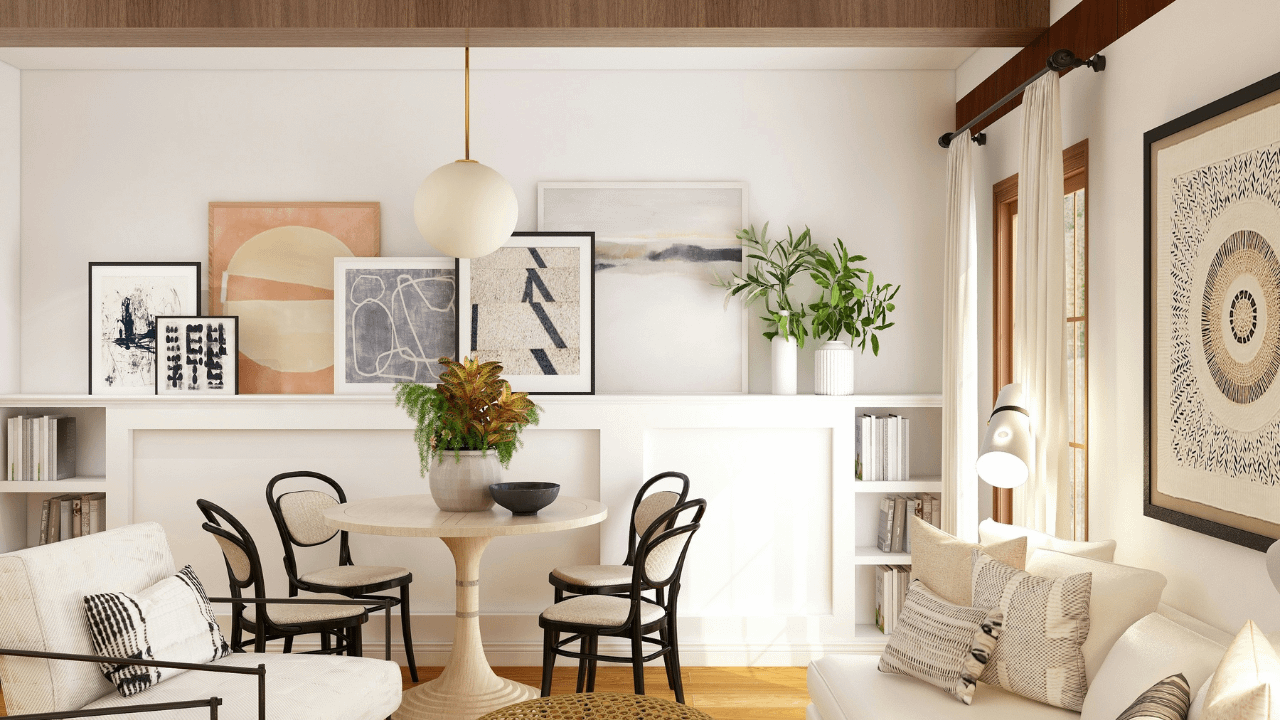
Credit: Keri Michelle Interiors / Moodboards and Creative Process

How to Apply this Model – Honing Perceptions and Developing Critical Thinking Ability
WALK THROUGH LIFE, NOTICE THINGS, AND ENGAGE. Ask yourself questions like: Do I like this? Why is it that color? Is the way I interact with it satisfying? Is there a better version of this? How does it make me feel? And why? Is it essential? Does it belong here? Is it a detriment to the environment? Do I care? Why do I care? Is this too big, too small? Does it make me feel uneasy, and why? Is it unnecessary? Why am I drawn to this object? Who made it and how? etc. …
Make a mental note of things you find that you think are good, and ask yourself why. Make a note of things you don’t like or think can be improved, and ask yourself why you have come to that conclusion. Ask others if they share your views and why / or not. Don’t be afraid to arrive at conclusions, thinking that you can always change or develop your answers; no one has to know.
When you begin to think more critically about things, you can then form more substantial opinions or views on those particular subjects. Once you cultivate your opinions, you tend to notice more things in the same subject area and can refine your understanding, expand on it, and develop a web of thoughts about the interconnection of these things. Fairly soon, you become aware of layers of information, meanings (or just noticing things) that you may have missed earlier. Your ability to discern deeper layers of meaning quickly will become more automatic, and you will become a better critical thinker and, therefore, a designer.
This same awareness becomes especially valuable when preparing a property for sale, where small design and presentation decisions can significantly impact buyer perception. Guides like cleaning and prepping your home before staging show how these concepts translate into practical action.
Employing divergent thinking as the basis for creative work – bringing your work to life
Unlike convergent thinking, which narrows options to find a single finite solution, creativity thrives on divergence. It starts with a situation and expands outward, allowing for possibilities and associations. This expansive thinking is invaluable, not just in Art of Design, but in almost all human endeavors.
An example of this is the criteria I use for evaluating whether a work could be considered ‘Art’ – which is when it possesses a “life of its own.” Each interaction with that work will likely reveal new or different thoughts, emotions, or layers of meaning for the person who engages with it, much like multiple conversations with a living, breathing person would. Successful design, like art, evolves and changes with context and interaction and takes on more value and meaning as a result.
Design in the Spatial Realm
In architecture, interior design, or property staging, design is about crafting experiences that shape our emotions and our lives. It manipulates tangible elements like furniture and materials, and intangible ones like light, space, and color, to define a space as a place with a “life of its own.”
These same ideas are applied in real-world scenarios like home staging to sell, where thoughtful design decisions can directly influence how buyers perceive a space.
So, How Does One Develop Their Own Potential as a Creative Thinker and Designer?
Below, I share a general outline of my design process, which anyone can adopt or adapt. I don’t always go step-by-step through the outline; it has become second nature for me now.
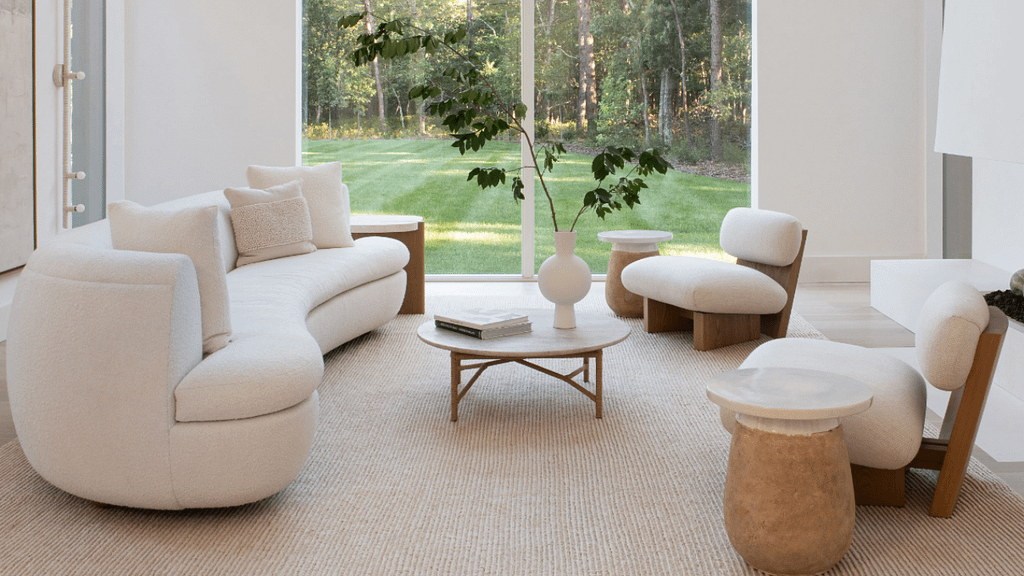
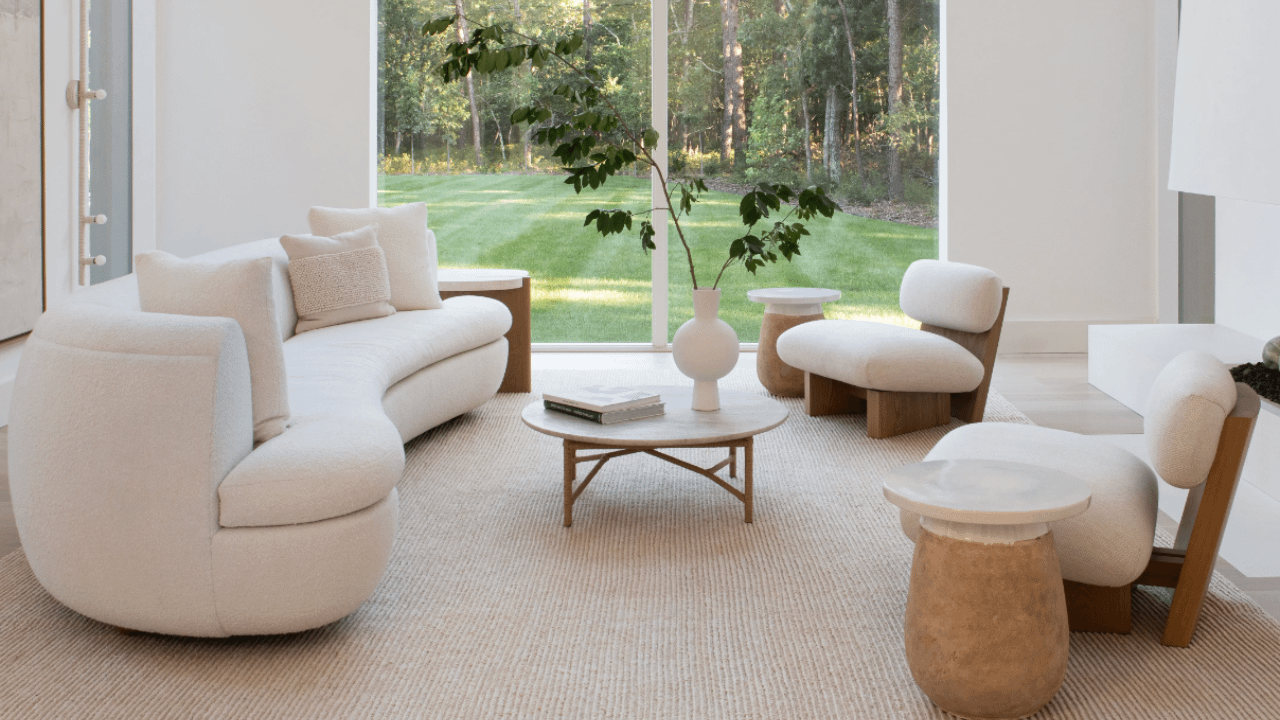
Credit: Vogue — Best Minimal Decor Ideas
Preparation (lifelong process)
1. Engage With Your Environment
With senses attuned to objects, qualities, surroundings, and situations in the world around you- consider them, and their nature from multiple perspectives, asking fundamental questions, challenging assumptions.
2. Observe People
Consider their actions, their motivations, and their preferences. Create theories and continuously test them with further observation and interaction (by talking to people or by observation and reading). This includes reflection on one’s own actions, thoughts, and preferences to understand the actions and reactions of others.
3. Be Aware of Ideas and Concepts
Engage in dialogue that is being held about these issues – to help reaffirm your own ideas by testing them or allowing them to evolve…
Action (creative thinking, production)
This stage gets easier, the more preparation is done beforehand = the more questions one has already answered for themselves, and the fewer that will need to be answered in a design process, making it less confusing or overwhelming.
1. Identification
Gather information on the ‘knowns’ and the ‘givens’. Consider known facts, environments, conditions, stated needs and requirements, desired goal or outcome; research the history, the context, the expectations, the pre-conceptions; Refine the list of knowns and givens, identify the unknowns
This is where the initial fundamental questions are posed, to understand what sits before you and what is being asked of you. Distill these issues down to the core of the matter to define the essence by removing other distracting, subordinate, or competing ideas. Some examples of those questions would be things like:
- What elements are essential?
- What is needed? What is lacking?
- What needs to be removed?
- What are the challenges? and the opportunities?=
- What are my assumptions that may be incorrect or limiting?
- What exists on the larger scale? What does the smaller scale look like? (I.e, context that this will exist in)
- Who is this really for? Who or what ultimately benefits from it?
- What am I really looking at here?
Especially at the early stage, try to remove all assumptions (even question the main ‘givens’) and strive to view the situation from multiple perspectives and viewpoints.
2. Determination
From your goal, develop a hypothesis about how to address the goal and what that end ‘product’ will look like – and give it a descriptive name. This is what I label as my ‘Concept’. It becomes your answer, solution, or response to achieve that goal, and will serve as an overall direction of the work. I use the concept to measure each decision against to verify if the decision is appropriate. Doing this will also help you to pare down your decisions and avoid trying to do ‘everything’, risking creating confusion because there is too much ‘going on’ or you have conflicting elements. Here’s where you might ask:.
- What is it really that I am trying to achieve?
- Why am I doing it (why is it important)?
- Who am I really doing this for? What are their limitations?
- What does this ’creation’ want to be?
Then, in more detail/depth to give the concept more definition:
- What about it stirs my senses, inspires, or moves me?
- What do I want others to see and to experience the way I do?
- What can I bring to this that will make it better than expected, that will bring benefits beyond what can be imagined?
- Where is the beauty to be found, to be experienced,
- Where is the opportunity to express joy in the components or elements – through color, shape, their own intrinsic or material qualities
If I were a painter, I would ask:
What quality or emotion am I trying to capture and share, or what thoughts do I have a need to convey, with the abilities and media that I have?
3. Creation
Assemble components (elements) and put them in place based on the design decisions you have made.. Step back and review: do the components work together effortlessly and harmoniously to achieve the overall concept? Revise and review again – often from a different perspective to erase biases and ‘blind spots. Examples of questions (again using the painter example):
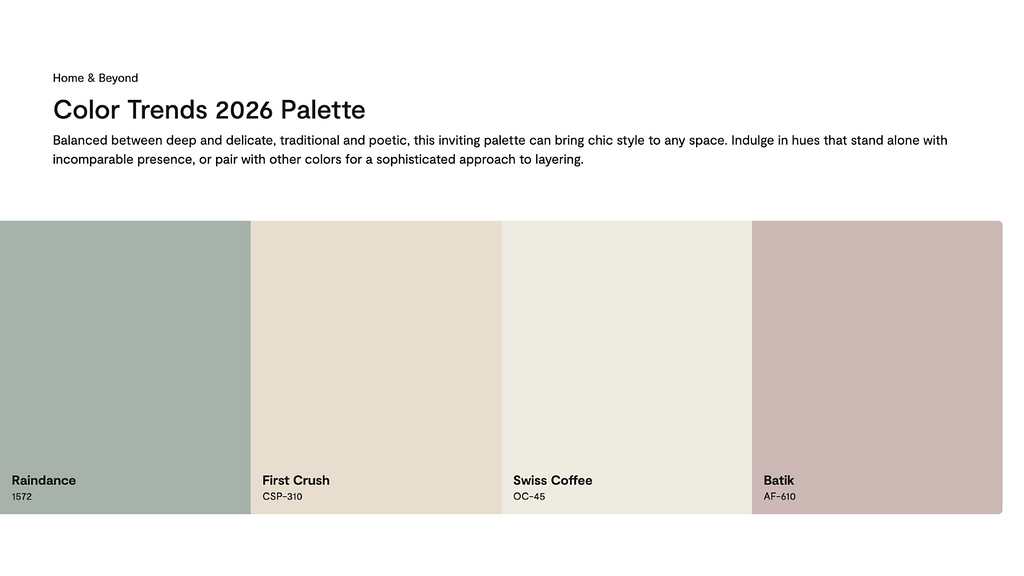
- Does this color palette help evoke the emotions and thoughts I am striving to portray?
- Are the background items in my painting competing or reinforcing the message?
- Does this rough brush stroke achieve a vagueness about the subject that is essential to the work?
- Is there a new or different type of paint I could create that would allow me to make these points more clearly?
I often find it easiest to establish the end goal first and know that in my ‘toolkit’ of ideas and knowledge, I’ve got content to pull from that will help me find a way to arrive at my objective – I have prepared.. It’s this determination of the way (the route, the methodology) that you take, which often involves the most amount of creative thinking.
Sometimes I have to arrive at this end goal by first building it up with all the thoughts and ideas I have that surround it, and then remove all extraneous components to pare it back down to a clearer and more poignant work. Simply step back to gain a better perspective and remove what doesn’t seem to align with your concept or reinforce it. While it can be difficult to relinquish ideas you love and want to use (and are likely biased towards), one method is to remove and ‘save’ these ideas somewhere and use them somewhere else where they might be more useful or fitting.
Remember, there is never a right or wrong answer, sometimes just a better or worse one, a more or less appropriate one. Every creation is a unique entity unto itself and should be evaluated on its own merits.
4. Test the Results
Test out the near-finished product and gain feedback. Revise if needed.
Finally, once you believe you have the correct essential components and have attained the best possible version of your concept, step back to assess the work as a whole. Do these pieces together create a whole that is more than the sum of these parts, and would the entire work exist if any one part were missing or different? All the components should work in harmony (in one language), making a ‘statement’ that not only defines the central concept in a variety of ways, they give it its own unique existence. If you’ve studied design, you’ll be familiar with Gestalt theory – the whole being more than the sum of the parts.
Where the ‘magic’ happens and the real creativity comes into play is when you’ve made both appropriate choices that achieve or surpass your goal, but also, those choices stir emotions (bring joy, surprise, relief, etc), and provoke thought (inspire, prompt curiosity, engagement, passion). That result comes from your ideas and views that are drawn from your experiences and engagement in life, which you bring to others through your design.
5. Delivery into the world
A very valuable piece of advice I received is that I won’t be present to explain all of the decisions I made when my creation meets its users, who might interact with it, so the decisions I make to create any work must speak for themselves. They need to be self-evident and effortless, if not initially, then through eventual use or deeper understanding. Quite often, a user may draw their own response or conclusions that you hadn’t even intended or anticipated. Then the work really does have a Life of its own.
6. Summarize
Take stock of outcome and continued use/implementation/state – constant evaluation.
So there you have it, a basic descriptive narrative of my design philosophy and process in very practical terms, which I hope has at least raised some questions and given some ideas to ponder!
Conclusion
Creativity is not reserved for artists or designers—it’s a way of engaging with life. By cultivating curiosity and critical thinking, anyone can unlock their creative potential and enrich their experiences. Check out the other posts where I take some of these concepts and apply them to specific situations.
Honing Perceptions and Developing Critical Thinking Ability – a Summary:
- Observation: Attune your senses to the environment, absorb the layers of information in front of you. Look for deeper layers of information and things you may have initially missed, and find the passion to continue.
- Engagement: Interact with people, read and research written information, push yourself to try new or even unorthodox things, and synthesize insights from diverse sources.
- Assessment: Examine and question everything you experienced to form hypotheses and views.
Challenge assumptions.
- Reflection: From these views, discern meaning, connections, and possibilities.
- Development: Honing these skills allows you to become more perceptive and your thinking to become more agile, sharpening your creative thinking abilities
- Practice: Repeating this process and refining it leads to a more developed and automatic thought process -becoming second nature over time.
My Design Process – a Summary as a Framework:
Here’s a practical framework distilled from years of design education and experience:
Preparation (Lifelong)
1. Engage with your environment, questioning and challenging assumptions.
2. Observe people—their actions, motivations, and preferences.
3. Stay open to new ideas, synthesize insights, and reflect on your own experiences.
Action
1. Identification: Gather facts, context, and constraints. Separate essentials from subordinate elements.
2. Determination: Ask probing questions. Distill the essence of your goal by stripping away distractions.
- Concept Development: Formulate a guiding idea, a mantra that informs every decision.
3. Creation
- Assemble components aligned with your concept. Review and refine.
- Remove elements that disrupt harmony, even if you’re attached to them. Save them for future projects.
4. Test
- Test the design. Seek feedback. Revise as needed.
- Ensure the work speaks for itself—decisions should be self-evident.
5. Delivery
- Focus on clarity and authenticity. Avoid overcomplicating or trying to address every concern in one project.
6. Summarize
- Evaluate outcomes continuously. Creativity is an ongoing process.
Where the Magic Happens
True creativity lies in making choices that are both appropriate and emotionally stirring. It’s about provoking curiosity, joy, or engagement through thoughtful design. These choices stem from deep observation and lived experience, transformed into something that resonates universally.
You can also explore more practical guides in our home blog or dive into our selling a home guide for step-by-step advice on preparing, staging, and marketing your property.
Key Takeaways
- Creativity is not a finite skill but a lifelong mindset.
- Design combines emotional depth with practical function.
- Observation, questioning, and reflection are the pillars of creative thinking.
- Divergent thinking fuels innovation and adaptability.
- Every design should have a life of its own…